An old idea that still works
In 1926 the architect Margarete Schütte-Lihotzky designed the Frankfurt Kitchen, a compact space planned around the movements of the person cooking. A few years earlier, Lillian Gilbreth had applied time-and-motion study to household work, measuring steps and reaches. Their insight still holds: store things at the point where they are first used.
You do not need a renovation to apply it. You only need to look at your kitchen as a series of tasks rather than a series of cupboards.
Map your recurring tasks
List the jobs your kitchen hosts in a normal week. Most households end up with something like: making hot drinks, breakfast, packing lunches, prepping and cooking dinner, washing up, putting away shopping and taking out recycling. For each one, stand where the task begins and notice how many steps and how many door openings it takes.
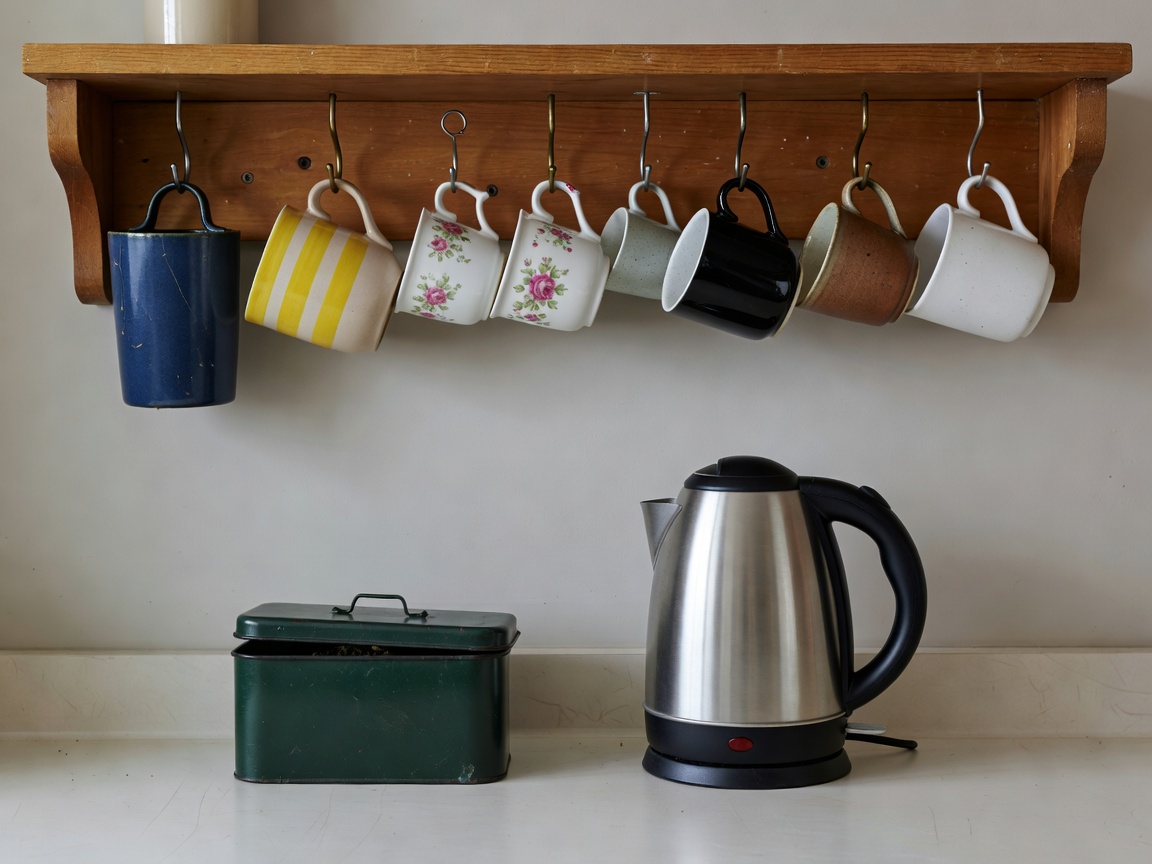
Drinks station
Kettle, mugs, tea, coffee and spoons within one arm's reach. A small tray keeps it contained on a cramped counter.
Prep zone
The longest clear stretch of counter, ideally between sink and hob. Knives, boards and a compost caddy live here.
Cooking zone
Pans, oils, salt, utensils and oven gloves beside the hob. If a tool is used daily, it does not belong at the back of a high shelf.
Washing-up zone
Dish soap, brushes, cloths and a drying spot by the sink. Everyday plates stored as close to the drying spot as possible.
Prime space is for daily things
The area between your hip and your shoulder, close to where you stand, is the most valuable storage you have. Professional organizers sometimes call it the "golden zone". Reserve it for things used daily. The roasting tin used at Christmas, the bread maker used twice and the cake stand belong higher, lower or in another room. This is the same logic as the 5S method used in workplaces, where "set in order" means arranging tools by frequency of use.
Keep in the golden zone
- Daily plates, bowls, glasses
- Main pan and pot
- Chopping board and one good knife
- Cooking oil and salt
Move higher or lower
- Seasonal bakeware
- Serving platters
- Bulk spares of staples
- Specialist appliances
Reconsider
- Third and fourth spatulas
- Lids without pots
- Takeaway containers beyond a stack of six
- Gadgets unused for a year
Pantry and fridge: see what you have
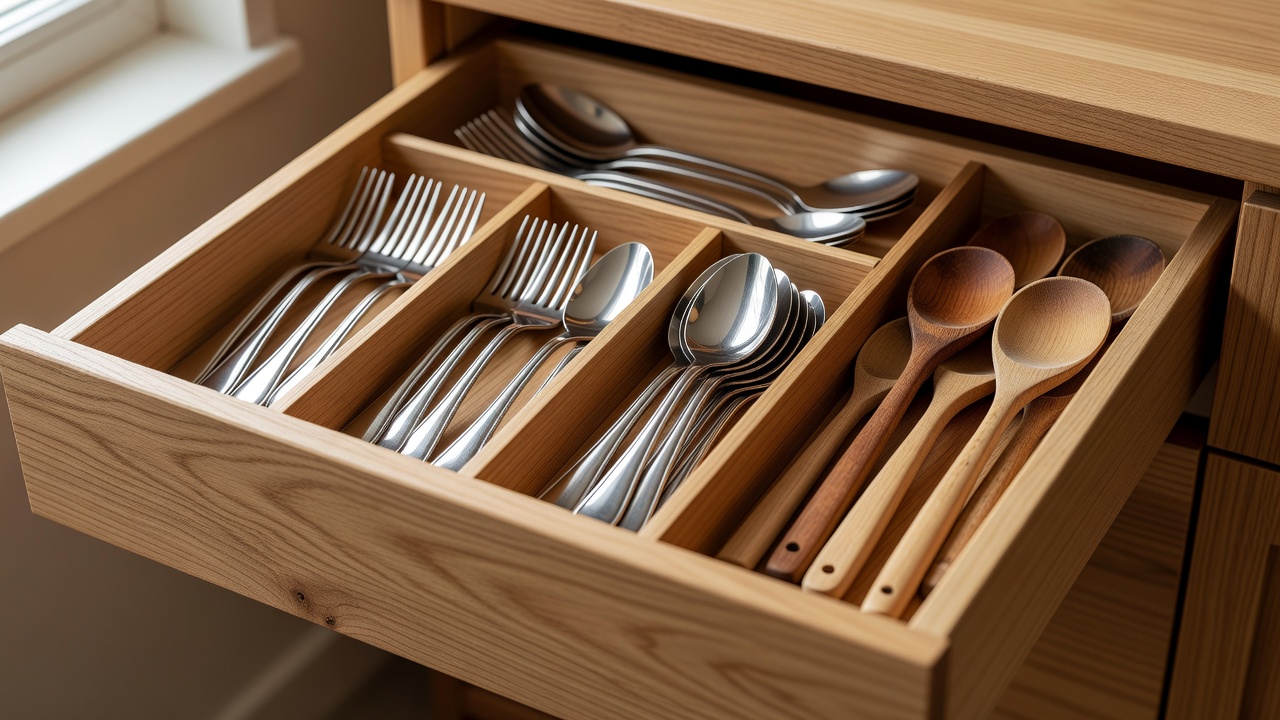
Food waste often starts with food you cannot see. Group pantry items by meal or use (breakfast, baking, tins for quick dinners) rather than by package type. Clear jars help, but so do the original packets standing upright in a shallow box. The key is a front-row view. Put newly bought items behind older ones, the "first in, first out" practice used in commercial kitchens.
For the fridge, the US government's FoodSafety.gov publishes a cold food storage chart that is useful for deciding how long leftovers can stay. A small "eat first" box on an eye-level shelf makes leftovers and half-used vegetables visible to everyone in the household.
Small and shared kitchens
In a galley or studio kitchen, use the inside of cupboard doors, a magnetic knife strip, and a rail with S-hooks under a shelf. In a shared house, give each person one shelf in the fridge and one cupboard section, but keep shared basics such as oil, salt and washing-up liquid in a clearly marked communal spot. Arguments in shared kitchens usually come from ambiguity, not from bad intentions.
Common obstacles
"I don't have enough counter space."
Clear the counter of anything not used daily. A chopping board placed over the sink, a fold-down wall table or a sturdy trolley can add temporary prep space.
"Washing up always piles up."
KC Davis suggests in How to Keep House While Drowning sorting a pile into categories (rubbish, dishes, laundry, things with a home, things without a home) and working through one at a time. Emptying the drying rack first gives the next load somewhere to go.
"My family puts things back in the wrong place."
Label shelves, not just containers. A strip of masking tape reading "mugs" removes the guesswork and is easy to change later.
Keep it running
End the day with a short kitchen close: clear the counter, start the dishwasher or wash what is left, wipe the prep zone and check the "eat first" box. Once a month, scan the pantry before shopping. The goal is not a showroom. It is a kitchen where tomorrow's breakfast can start without moving anything out of the way.