Design for the least patient person
A storage system in a shared home only works if the person in the biggest hurry can use it. That might be a teenager, a flatmate coming off a night shift, or you on a bad day. Elaborate colour codes and nested boxes fall apart quickly. Broad categories and visible labels last.
Cassandra Aarssen's "Clutterbug" approach, set out in Real Life Organizing, is helpful here: people differ in whether they prefer to see their things or hide them, and whether they like detailed or simple categories. In a shared space, aim for the simplest version everyone can live with.
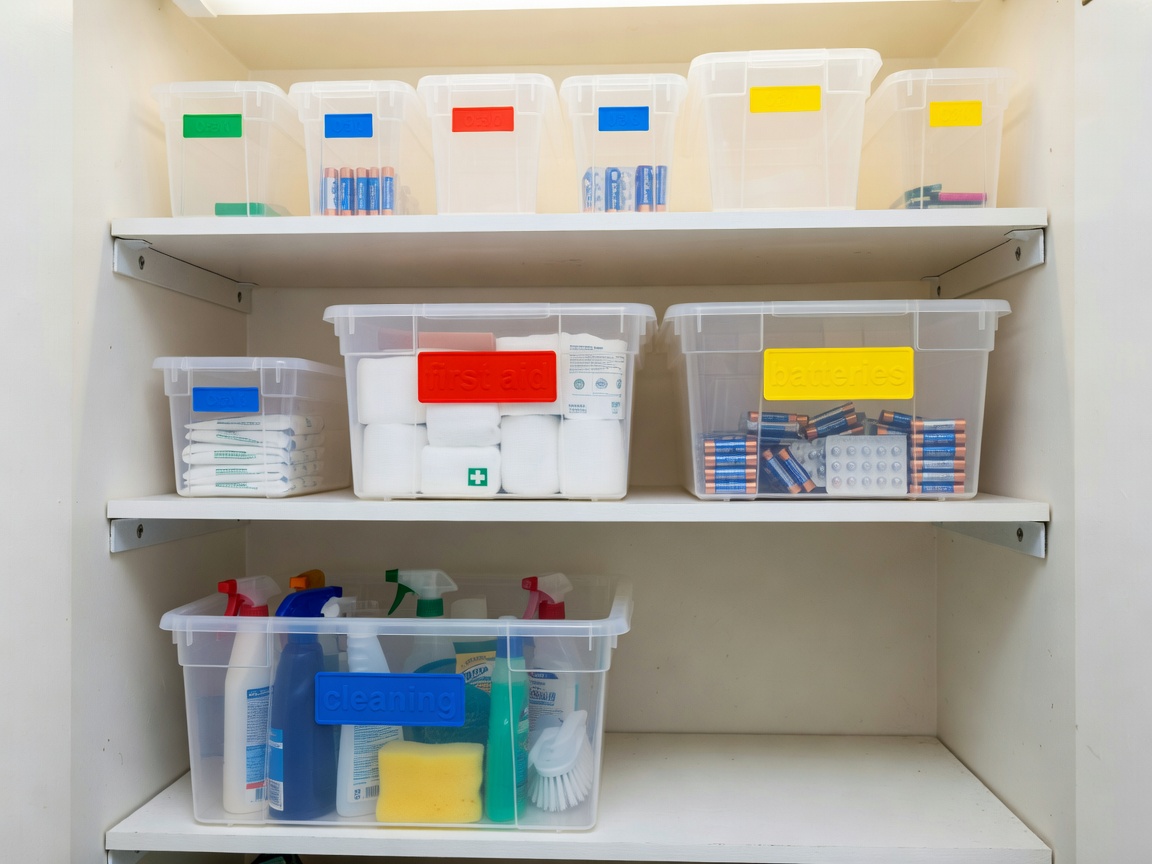
Choose a few broad categories
Start with categories that match how people ask for things. Nobody asks for "consumables"; they ask for batteries, plasters or light bulbs. A typical household might need:
Fix-it
Screwdrivers, tape, picture hooks, glue, a torch, spare fuses.
Care
First aid, painkillers, thermometer, plasters, prescriptions kept as directed.
Restock
Bin bags, toilet roll, light bulbs, batteries, washing-up liquid.
Paper
Stamps, envelopes, scissors, chargers and cables, the household folder.
Store each category in one container, in one place. A single "batteries" box is far easier than batteries in the kitchen drawer, the hall cupboard and the desk.
Label plainly, and label the shelf
Use words, and pictures if children or non-readers of the household language share the space. Write on masking tape or paper tags so labels can change. Label the shelf edge as well as the box, so a box returned in the wrong place is obvious. This is the "visual management" principle behind Kanban boards and 5S workplace organization: make the right place visible so the system corrects itself.
Create a holding zone
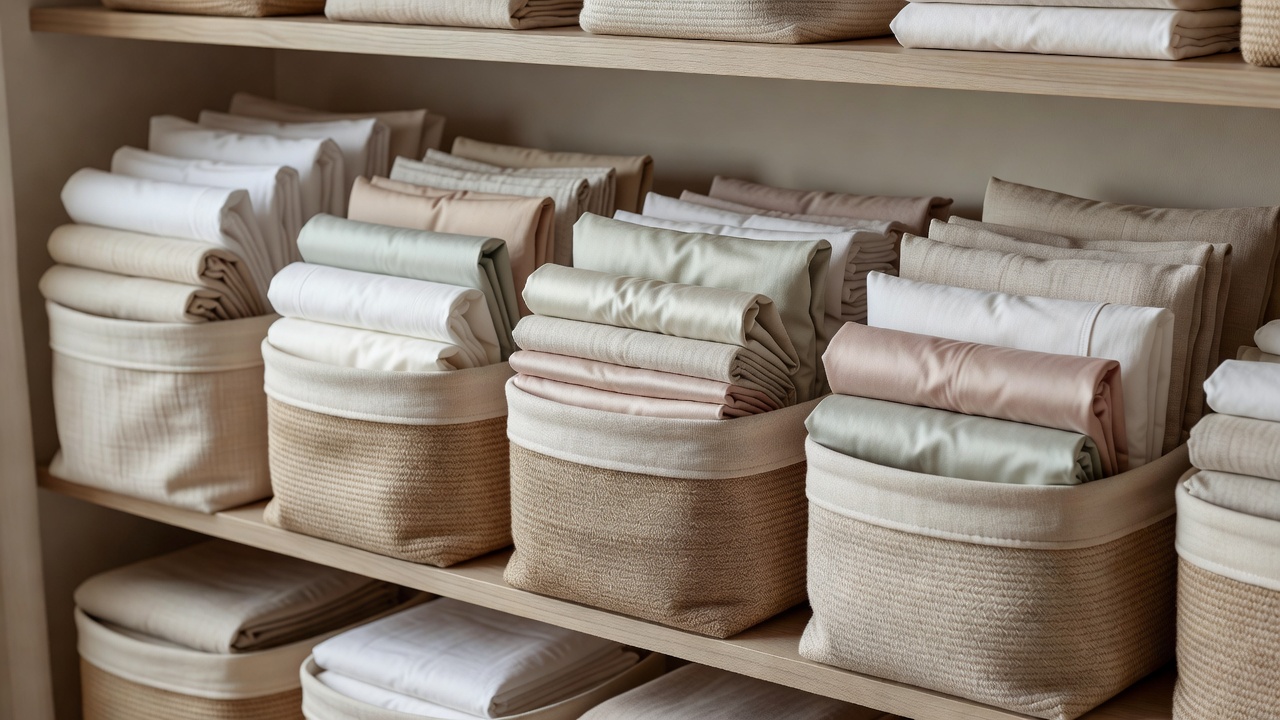
Every shared home produces items nobody can place: a mystery cable, a borrowed dish, a single glove. Without a home, they drift across surfaces. Designate one basket as the holding zone. Anyone can drop things there, and the basket is sorted on a fixed day, perhaps during a weekly reset. Anything unclaimed after two weeks is passed on, recycled or discarded.
Keep, move or reconsider
Keep in shared storage
- Items several people use
- Emergency and care supplies
- One reasonable spare of each staple
Move to personal space
- Hobby supplies used by one person
- Individual toiletries
- Personal paperwork
Reconsider
- Dried-up pens and glue
- Cables for devices you no longer own
- Expired medicines (return to a pharmacy)
Dispose of old paint, batteries and chemicals properly. The US Environmental Protection Agency publishes guidance on household hazardous waste, and many local councils run collection points. Expired medicines should usually go back to a pharmacy rather than the bin.
Sentimental and long-term storage
Lofts, under-bed boxes and storage units often hold things that belong to the past rather than the household's current life. Margareta Magnusson's The Gentle Art of Swedish Death Cleaning offers a kind, unhurried way to think about this: sort with the people you share a life with in mind, and keep what matters with a note explaining why. Label long-term boxes with contents and the date, and keep a simple list on paper or a phone so nobody needs to open five boxes to find the Christmas lights.
Common obstacles
"One person keeps reorganizing everything."
Agree that changes to shared spaces are discussed first. Write the agreed categories on a card inside the cupboard door.
"We've run out of room."
Check for duplicates before buying more storage. Shared storage often holds three of everything because no one could find the first two.
"Labels feel too formal for our home."
They can be handwritten, funny or drawn. A label exists to save someone a question, not to look neat.
Review twice a year
Pick two dates, perhaps when clocks change, to check the shared cupboard together. Restock first aid, test the torch, clear the holding basket and ask each person whether the categories still make sense. Fifteen minutes, twice a year, keeps a shared system honest.